Korean Bibimbap
Highlighted under: Traditional World Food Inspiration
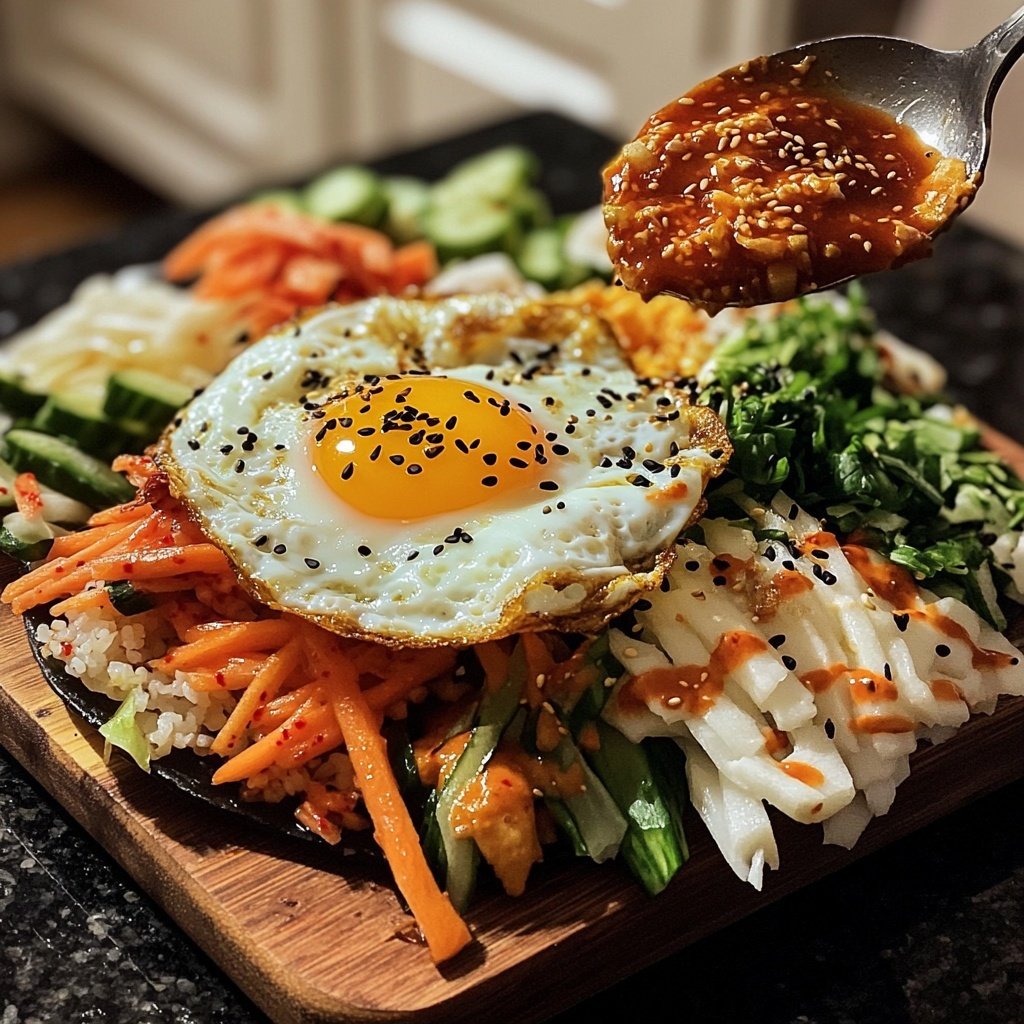
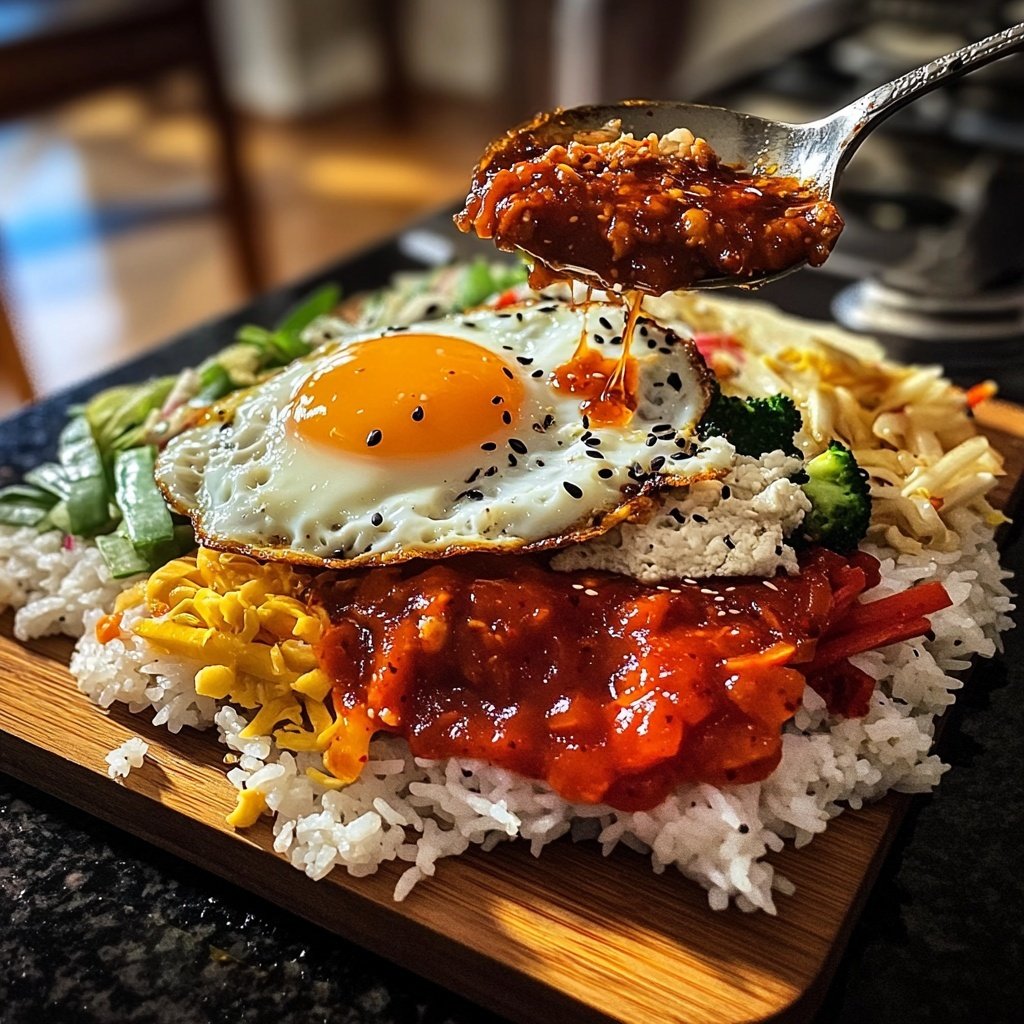
Korean Bibimbap is a vibrant and flavorful rice bowl topped with an array of fresh vegetables, marinated meats, and a fried egg, all drizzled with spicy gochujang sauce.
Korean Bibimbap is a delightful dish that showcases the harmony of flavors and textures in Korean cuisine. Each ingredient contributes to a well-balanced meal that is as nutritious as it is delicious.
Why You'll Love This Recipe
- A colorful presentation that makes every bite exciting
- Customizable with your choice of vegetables and proteins
- A delightful mix of spicy, savory, and fresh flavors
A Colorful and Nutritious Meal
Korean Bibimbap stands out not only for its vibrant colors but also for its balanced nutrition. Each ingredient is carefully selected to provide a variety of vitamins and minerals, making this dish a wholesome option for any meal. The combination of fresh vegetables like spinach, carrots, and zucchini ensures you get a good dose of nutrients, while the protein from the egg and marinated meat adds satisfying heartiness.
The beauty of Bibimbap lies in its versatility. You can easily customize it by swapping out vegetables or proteins based on what you have on hand or your dietary preferences. This flexibility allows you to enjoy a different flavor profile each time you make it, keeping your meals exciting and fresh.
The Perfect Balance of Flavors
One of the most delightful aspects of Korean Bibimbap is its harmonious blend of flavors. The spiciness of gochujang, the nuttiness of sesame oil, and the freshness of the vegetables create a taste sensation that is both exciting and comforting. Each bite offers a unique combination of textures and tastes, from the crunch of the vegetables to the creaminess of the fried egg.
To enhance the flavor, you can experiment with different garnishes or additional sauces. For those who love a little heat, adding extra gochujang or even a sprinkle of chili flakes can elevate the dish to a whole new level. The key is to balance the spicy and savory elements with the fresh components for a truly satisfying meal.
A Meal for Every Occasion
Korean Bibimbap is incredibly versatile, making it suitable for any occasion. Whether you're preparing a casual family dinner or an impressive dish for guests, this colorful rice bowl fits the bill perfectly. Its eye-catching presentation makes it a feast for the eyes, while its rich flavors will keep everyone coming back for more.
Additionally, Bibimbap is a fantastic option for meal prep. You can prepare the components in advance and assemble them when you're ready to eat, making it a convenient choice for busy weekdays. With just a little planning, you can enjoy a homemade, nutritious meal that feels special.
Ingredients
For the Bibimbap
- 2 cups cooked jasmine rice
- 1 cup spinach, blanched
- 1 cup bean sprouts, blanched
- 1 carrot, julienned
- 1 zucchini, julienned
- 1 cup shiitake mushrooms, sliced
- 4 eggs
- 4 tablespoons gochujang (Korean chili paste)
- 1 tablespoon sesame oil
- Salt to taste
For the Marinade (optional)
- 1 pound ground beef or chicken
- 2 tablespoons soy sauce
- 1 tablespoon sugar
- 1 tablespoon minced garlic
- 1 teaspoon sesame oil
Feel free to customize the toppings based on your preferences!
Instructions
Prepare the Marinade
In a bowl, combine the ground meat with soy sauce, sugar, minced garlic, and sesame oil. Mix well and let it marinate for at least 15 minutes.
Cook the Meat
In a pan over medium heat, cook the marinated meat until fully cooked. Set aside.
Sauté the Vegetables
In the same pan, sauté the zucchini and carrots until tender. Add the shiitake mushrooms and cook for another 2-3 minutes. Season with a bit of salt.
Fry the Eggs
In a separate pan, fry the eggs sunny-side up until the whites are set but the yolks are still runny.
Assemble the Bibimbap
In a bowl, place a serving of jasmine rice. Top with the sautéed vegetables, blanched spinach, bean sprouts, cooked meat, and a fried egg. Drizzle with sesame oil and gochujang to taste.
Serve
Mix everything together before eating to enjoy the full flavor. Serve hot!
Enjoy your homemade Korean Bibimbap!
Pro Tips
- For a vegetarian version, replace the meat with tofu or additional vegetables.
Ingredient Tips
When selecting ingredients for your Bibimbap, aim for the freshest produce you can find. The quality of your vegetables will significantly impact the flavor of your dish. Look for vibrant, crisp greens and colorful root vegetables, as they will not only taste better but also enhance the visual appeal of your meal.
If you're looking for a vegetarian option, consider replacing the meat with tofu or tempeh, marinated and sautéed to perfection. This substitution retains the dish's protein content while catering to those who prefer plant-based meals. You can also add extra vegetables like bell peppers or radishes for even more flavor.
Serving Suggestions
When serving Bibimbap, it’s traditional to provide individual bowls so everyone can assemble their own. This interactive element makes the meal fun and encourages guests to customize their bowls to their liking. Consider offering a variety of toppings like kimchi, pickled vegetables, or even avocado slices for an extra twist.
To complement the dish, serve it alongside a light soup or a simple salad. These sides can balance the richness of the Bibimbap and provide a refreshing contrast. Additionally, a cold beverage, such as iced green tea or a light Korean beer, pairs beautifully with the meal.
Storage and Reheating
If you have leftovers, storing them properly is key to maintaining the flavors and textures of your Bibimbap. Keep each component in separate airtight containers in the refrigerator. This way, you can enjoy the elements fresh even a few days later.
When reheating, it’s best to warm the rice and vegetables separately. This helps prevent sogginess and keeps the flavors vibrant. For the fried egg, consider making a fresh egg each time to maintain its texture. With the right storage and reheating methods, you can enjoy delicious Bibimbap days later!
Questions About Recipes
→ Can I make Bibimbap ahead of time?
Yes, you can prepare the ingredients ahead and assemble the dish just before serving.
→ What can I serve with Bibimbap?
You can serve it with kimchi or a side of pickled vegetables for added flavor.
→ Is Bibimbap suitable for meal prep?
Absolutely! Just store the ingredients separately and mix them when ready to eat.
→ Can I use brown rice instead of jasmine rice?
Yes, brown rice is a healthy alternative, though it may alter the texture slightly.
Korean Bibimbap
Created by: Victoria Hall
Recipe Type: Traditional World Food Inspiration
Skill Level: Intermediate
Final Quantity: 4 servings
What You'll Need
For the Bibimbap
- 2 cups cooked jasmine rice
- 1 cup spinach, blanched
- 1 cup bean sprouts, blanched
- 1 carrot, julienned
- 1 zucchini, julienned
- 1 cup shiitake mushrooms, sliced
- 4 eggs
- 4 tablespoons gochujang (Korean chili paste)
- 1 tablespoon sesame oil
- Salt to taste
For the Marinade (optional)
- 1 pound ground beef or chicken
- 2 tablespoons soy sauce
- 1 tablespoon sugar
- 1 tablespoon minced garlic
- 1 teaspoon sesame oil
How-To Steps
In a bowl, combine the ground meat with soy sauce, sugar, minced garlic, and sesame oil. Mix well and let it marinate for at least 15 minutes.
In a pan over medium heat, cook the marinated meat until fully cooked. Set aside.
In the same pan, sauté the zucchini and carrots until tender. Add the shiitake mushrooms and cook for another 2-3 minutes. Season with a bit of salt.
In a separate pan, fry the eggs sunny-side up until the whites are set but the yolks are still runny.
In a bowl, place a serving of jasmine rice. Top with the sautéed vegetables, blanched spinach, bean sprouts, cooked meat, and a fried egg. Drizzle with sesame oil and gochujang to taste.
Mix everything together before eating to enjoy the full flavor. Serve hot!
Extra Tips
- For a vegetarian version, replace the meat with tofu or additional vegetables.
Nutritional Breakdown (Per Serving)
- Calories: 550 kcal
- Total Fat: 20g
- Saturated Fat: 4g
- Cholesterol: 180mg
- Sodium: 600mg
- Total Carbohydrates: 68g
- Dietary Fiber: 5g
- Sugars: 4g
- Protein: 22g